- Thane, Mumbai

Shoulder & Knee Arthroscopy in Thane: When Is It Better Than Open Surgery?
Shoulder & Knee Arthroscopy in Thane: When Is It Better Than Open Surgery?
Introduction
Featuring: Dr Saikat Jena & Dr Amol Gharote Arthroscopy & Sports Injury Specialists, Stellars Superspeciality Hospital, Thane
Arthroscopy has transformed modern orthopedics by allowing surgeons to diagnose and treat joint problems with minimal tissue disruption. For many shoulder and knee conditions, arthroscopy offers faster recovery, reduced pain, and smaller scars. At Stellars Superspeciality Hospital in Thane, Dr Saikat Jena and Dr Amol Gharote lead advanced arthroscopy care that delivers reliable functional outcomes for athletes, working adults, and seniors.
About the Arthroscopy Team at Stellars Superspeciality Hospital
Dr Saikat Jena is an experienced orthopedic surgeon specializing in shoulder and knee arthroscopy, ligament reconstruction, and sports injury management. Dr Amol Gharote focuses on cartilage repair, meniscal preservation, and motion-preserving techniques for joint health. Their combined expertise ensures individualized treatment plans and a smooth rehabilitation pathway.
Learn more about our orthopedic services at the Orthopedics Department:
https://www.stellarshospital.com/service/orthopedic-treatment-in-thane/
Arthroscopy vs Open Surgery What’s the Difference?
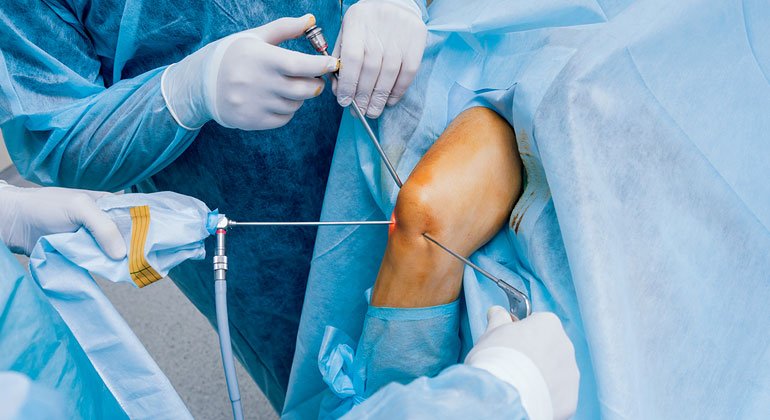
Arthroscopy is a minimally invasive technique that uses a small camera (arthroscope) and micro-instruments through tiny incisions. Surgeons visualize the joint on a monitor and perform repairs such as meniscus trimming, ACL reconstruction, rotator cuff repair, and loose body removal.
Open surgery involves a larger incision to access the joint directly. It remains essential for complex fractures, severe deformities, and massive tissue injuries where exposure and reconstruction are required.
When Shoulder Arthroscopy Is Better Than Open Surgery
Shoulder arthroscopy is often preferred when treating:
- Rotator cuff tears (small to medium-sized)
- Shoulder instability and recurrent dislocations
- SLAP lesions and labral tears
- Impingement syndrome and bursitis
- Adhesive capsulitis (selected cases)
- Cartilage injuries and loose fragments
Arthroscopy is especially advantageous for patients who want a faster return to daily activities or sport and for athletes needing precise, tissue-sparing repairs.
When open surgery may be necessary: very large rotator cuff tears with severe tendon retraction, complex proximal humerus fractures, or major bone deformities.
When Knee Arthroscopy Is the Better Option
Knee arthroscopy is appropriate for a wide range of conditions:
➢ Meniscus tears that are repairable or symptomatic
➢ ACL/PCL injuries requiring reconstruction
➢ Cartilage defects requiring debridement or restoration techniques
➢ Removal of loose bodies, synovitis, or infected tissue
➢ Patellar instability and maltracking in selected cases
Knee arthroscopy often enables same-day discharge, early mobilization, and structured rehabilitation that helps patients return to work and sports faster than traditional open approaches.
Open knee surgery is still indicated for advanced osteoarthritis requiring joint replacement or complex multi-ligament injuries that need extensive reconstruction.
Benefits of Arthroscopy
✅ Smaller incisions and better cosmetic results
✅ Less postoperative pain and swelling
✅ Shorter hospital stay and faster return to routine activities
✅ Lower infection risk and less blood loss
✅ Quicker initiation of physiotherapy and rehabilitation
These benefits make arthroscopy an attractive option for many shoulder and knee pathologies, but candidacy should be determined by a specialist after clinical evaluation and imaging.
Typical Recovery Timeline
| Shoulder Arthroscopy – Recovery Timeline | Knee Arthroscopy – Recovery Timeline |
|---|---|
| Sling for support: 1–2 weeks | Walk with support: Same day in many cases |
| Light daily activities: 7–10 days | Office work: 3–5 days (job dependent) |
| Strength training begins: 4–6 weeks | Strength & conditioning: 3–4 weeks |
| Return to competitive sports: 3–5 months | Full sports return: 2–3 months (longer for reconstructions) |
| Recovery timelines may vary based on the procedure and individual factors. Your surgeon and physiotherapy team will personalize your rehabilitation program according to your specific repair and fitness level. | |
Who Should See an Arthroscopy Specialist?
Consult an arthroscopy specialist if you have: persistent joint pain despite conservative care, joint locking or catching, instability or giving way, recurrent dislocations, or a sports injury that limits performance. Early evaluation helps preserve joint tissue and improves long-term outcomes.
To schedule a consultation, visit our contact page:
https://www.stellarshospital.com/contact-us/
FAQs
Mild to moderate discomfort is common initially, but pain is usually less than after open surgery. Effective pain control protocols are used to ensure comfort.
Most arthroscopic procedures take 30–90 minutes depending on complexity.
Yes, most procedures are covered. Stellars offers assistance with cashless approvals and billing guidance.
Driving depends on the operated joint and pain control. Many patients resume driving within 1–2 weeks for shoulder procedures and when they can safely control the vehicle. Discuss specifics with your surgeon.
Conclusion
Arthroscopy offers precise, tissue-sparing solutions for many shoulder and knee problems. If you’re exploring treatment options in Thane, trust the arthroscopy team at Stellars Superspeciality Hospital. Dr Saikat Jena and Dr Amol Gharote combine surgical expertise with modern rehabilitation to get you moving again.
Book your consultation now with Dr Saikat Jena or Dr Amol Gharote at Stellars Superspeciality Hospital: Contact Us or call